If you’re craving a dish bursting with flavor, texture, and a bit of heat, look no further than Sweet & Spicy Korean Noodles. Imagine slurping up perfectly cooked noodles coated in a luscious sauce that balances sweet and spicy tones, all while incorporating fresh, vibrant vegetables. It’s the kind of meal that feels like a warm hug on a chilly evening, perfect for cozy family gatherings or weeknight dinners.
Fun fact: did you know that Korean cuisine embraces bold flavors and wholesome ingredients? That’s why I am so excited to share this recipe with you! It’s quick, savory, and sure to please even the pickiest of eaters. In a way, it reminds me of my beloved stir-fried vegetable rice recipe — both are simple to whip up and never fail to impress. You’ll find your family continuously coming back for seconds!
What is Sweet & Spicy Korean Noodles?
So, what’s the deal with Sweet & Spicy Korean Noodles? It’s a delightful medley of textures and flavors, where tender noodles meet a savory sauce that truly captures the essence of Korean cooking. The name itself may leave you intrigued — did someone have a sweet tooth and a love for spicy food? Perhaps! There’s a little saying I love to live by: “the way to a man’s heart is through his stomach.” And let me tell you, these noodles can conquer any heart! So, ready to bring a little excitement to your dinner table? Let’s dive in!
Why You’ll Love This Sweet & Spicy Korean Noodles
Main Dish Highlight
First things first, these Sweet & Spicy Korean Noodles are not just any noodle dish; they’re packed with flavors that dance on your taste buds. Every bite offers a delightful combination of sweetness from the brown sugar, a hint of heat from the gochujang, and the fresh crunch of vegetables. It’s hard not to enjoy such an enticing meal!
Cost-saving Benefits of Cooking at Home
And here’s a bonus: cooking at home not only saves your wallet but also allows you to whip up something healthier than takeout! Not to mention, it’s a chance to showcase your culinary skills. Instead of ordering in, why not treat your loved ones to a homemade feast?
Flavorful Toppings
Lastly, the toppings! A sprinkle of sesame seeds and chopped scallions gives you that restaurant-style finish, intrigue, and extra flavor! If you love veggie stir-fry as much as I do, you’ll appreciate how the flavors of this dish match the excitement of a well-prepared vegetable stir-fry. Now, let’s get you cooking!
How to Make Sweet & Spicy Korean Noodles
Quick Overview
Making Sweet & Spicy Korean Noodles is incredibly easy — in just 30 minutes, you’ll have a scrumptious dish on the table. The smooth, elastic noodles combined with the dangerously addictive sauce create a satisfying meal that’s perfect for any day of the week.
Ingredients
- Korean noodles (e.g., Japchae or noodles of your choice) – 12 oz.
- Soy sauce – 3 tbsp
- Gochujang (Korean chili paste) – 2 tbsp
- Brown sugar – 1 tbsp
- Garlic (minced) – 3 cloves
- Sesame oil – 2 tsp
- Vegetables (e.g., bell peppers, carrots, and spinach; cut into thin strips) – 2 cups total
- Scallions (for garnish) – 2 stalks, sliced
- Sesame seeds (for garnish) – 1 tbsp
Step-by-Step Instructions
- Cook the Noodles: Start by boiling water in a large pot. Once it’s at a rolling boil, add your choice of Korean noodles. Follow the package instructions, typically cooking them for about 5-7 minutes until al dente. Drain and set aside.
- Prepare the Sauce: In a small bowl, whisk together soy sauce, gochujang, brown sugar, minced garlic, and sesame oil until well combined. This will become your flavorful sauce.
- Sauté the Vegetables: In a large skillet or wok, heat a teaspoon of sesame oil over medium-high heat. Toss in your vegetables and stir-fry them for about 3-4 minutes until they’re slightly tender but still crisp.
- Combine Everything: Add the cooked noodles to the skillet with the sautéed vegetables. Pour the sauce over the noodles and toss everything together gently over medium heat for another 2-3 minutes, ensuring the noodles are coated in that delectable sauce.
- Garnish and Serve: Once everything is heated through, transfer the noodles to a serving platter. Top with sliced scallions and a sprinkle of sesame seeds. Voilà, your Sweet & Spicy Korean Noodles are ready to enjoy!
Top Tips for Perfecting Sweet & Spicy Korean Noodles
- Substitutions: If you’re not a fan of gochujang or need a milder alternative, try sriracha or a combination of sweet chili sauce and a pinch of crushed red pepper flakes for a kick.
- Timing: Ensure your vegetables remain crisp by adding them to the skillet at the right time as highlighted in the recipe. No one wants mushy veggies!
- Common Mistakes: Avoid overcooking your noodles; they should be al dente and should soak up the sauce without becoming mushy.
Storing and Reheating Tips
Leftovers? No problem! Store your Sweet & Spicy Korean Noodles in an airtight container in the refrigerator for up to 3 days. If you want to freeze them, pop them in a freezer-safe container. They’ll hold up well for about a month.
When you’re ready to enjoy your leftovers, simply reheat in the microwave or on the stovetop with a splash of water or broth to help retain that delicious texture.
So, there you have it — your guide to making incredible Sweet & Spicy Korean Noodles. Give this recipe a try, and it might just become a staple in your household. Happy cooking!
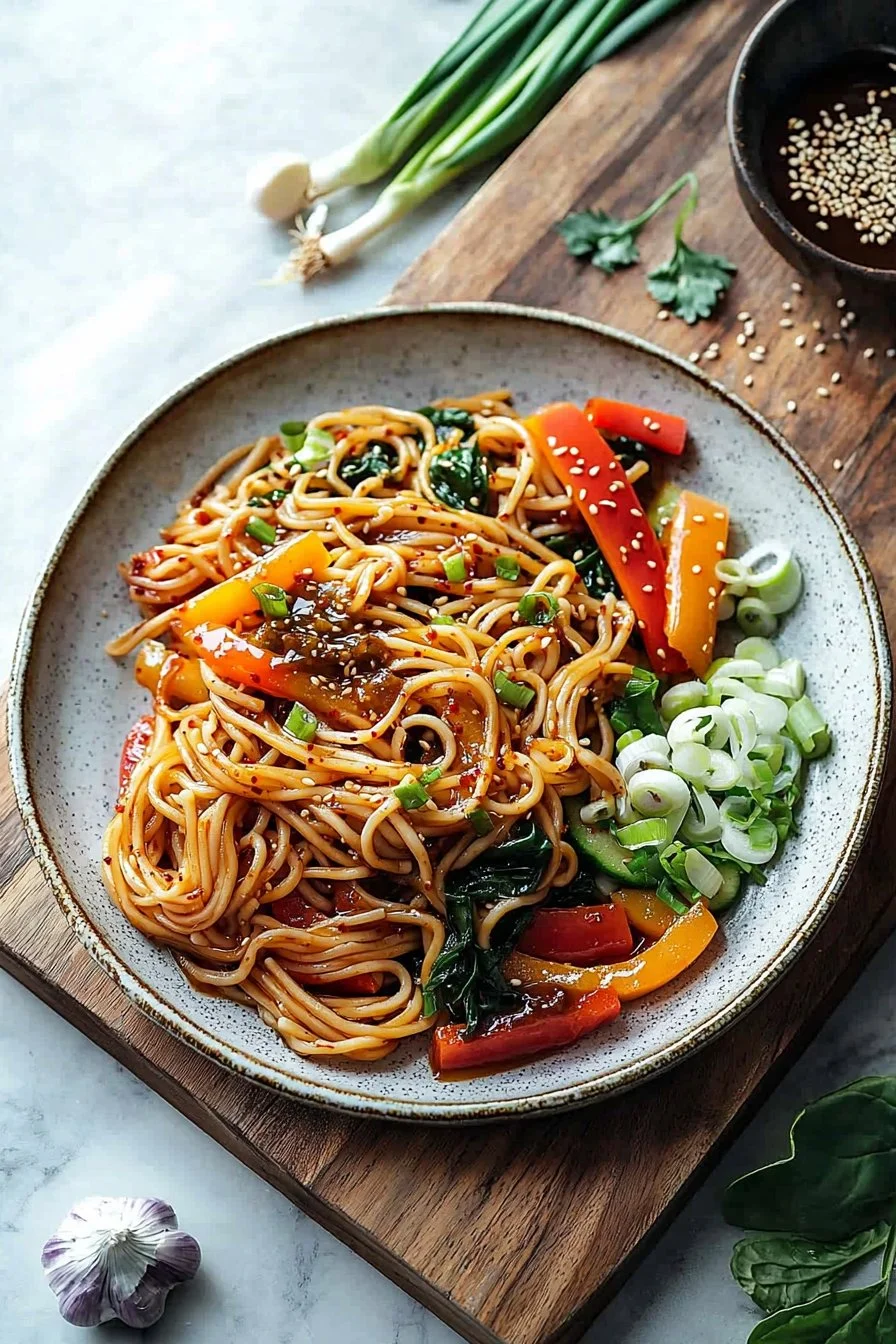
Frequently Asked Questions
Have questions? Let’s dive into some common inquiries!
- Can I add protein to this dish?
Absolutely! Chicken, beef, or chickpeas can be great additions to make your meal heartier. - What if I don’t have gochujang?
If gochujang is hard to find, a mixture of miso paste and a dash of hot sauce could mimic the flavors nicely. - Is this recipe gluten-free?
You can easily substitute the noodles with a gluten-free variety and ensure your soy sauce is gluten-free.
Get ready to savor your Sweet & Spicy Korean Noodles! Enjoy every bite!
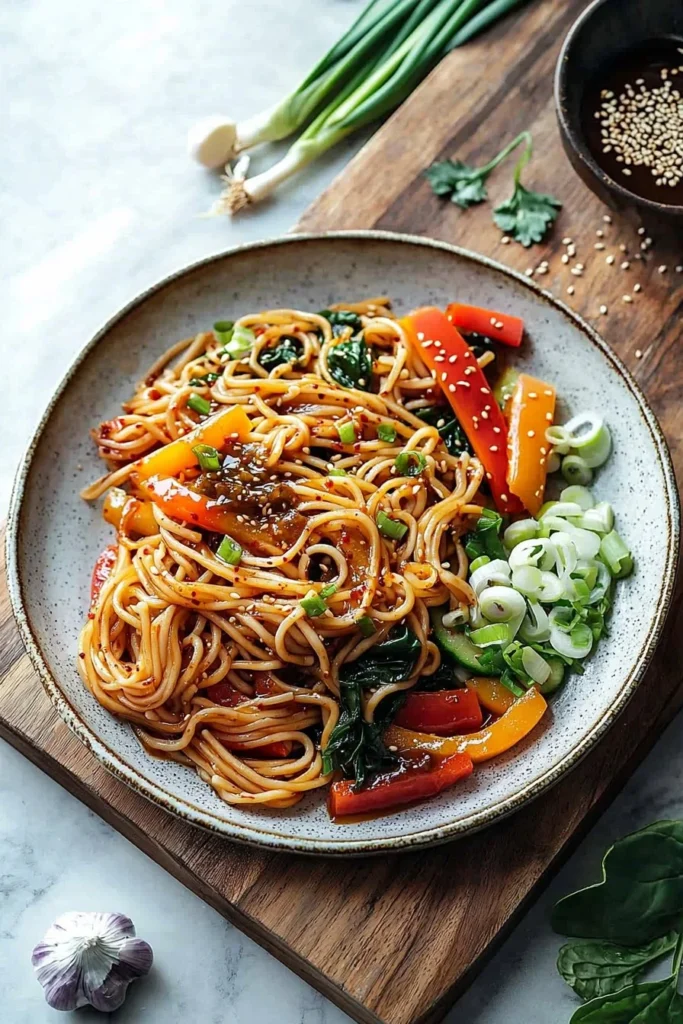
Sweet & Spicy Korean Noodles
Ingredients
Method
- Start by boiling water in a large pot. Once it’s at a rolling boil, add your choice of Korean noodles. Follow the package instructions, typically cooking them for about 5-7 minutes until al dente. Drain and set aside.
- In a small bowl, whisk together soy sauce, gochujang, brown sugar, minced garlic, and sesame oil until well combined. This will become your flavorful sauce.
- In a large skillet or wok, heat a teaspoon of sesame oil over medium-high heat. Toss in your vegetables and stir-fry them for about 3-4 minutes until they’re slightly tender but still crisp.
- Add the cooked noodles to the skillet with the sautéed vegetables. Pour the sauce over the noodles and toss everything together gently over medium heat for another 2-3 minutes, ensuring the noodles are coated in that delectable sauce.
- Once everything is heated through, transfer the noodles to a serving platter. Top with sliced scallions and a sprinkle of sesame seeds. Voilà, your Sweet & Spicy Korean Noodles are ready to enjoy!
Notes

I am Mark Luke and I’m the founder of PrinterBio.com. I started this site because I was tired of dealing with the problems that come with using printers. I wanted to help others avoid the time and frustration I had, So I started this site based on my own experience & what I’ve learned from other professionals. My goal is to help you find the right printer and easily solve any problems you may have with your printer.